In this simulated work experience, I had a great chance to collaborate with Year 2 students on their animation project. I watched their animatic, and it was very impressive.
The story is about a man with an ugly face. Even though the villagers were prejudiced against him, he still helped everyone who passed by. In the end, people built a statue to worship him as a god, but they forgot who he really was.
The characters and scenes have a strong style of ancient Chinese mythology. The story is not only mysterious but also makes you think deeply about life. I really enjoyed working on such a charming project.
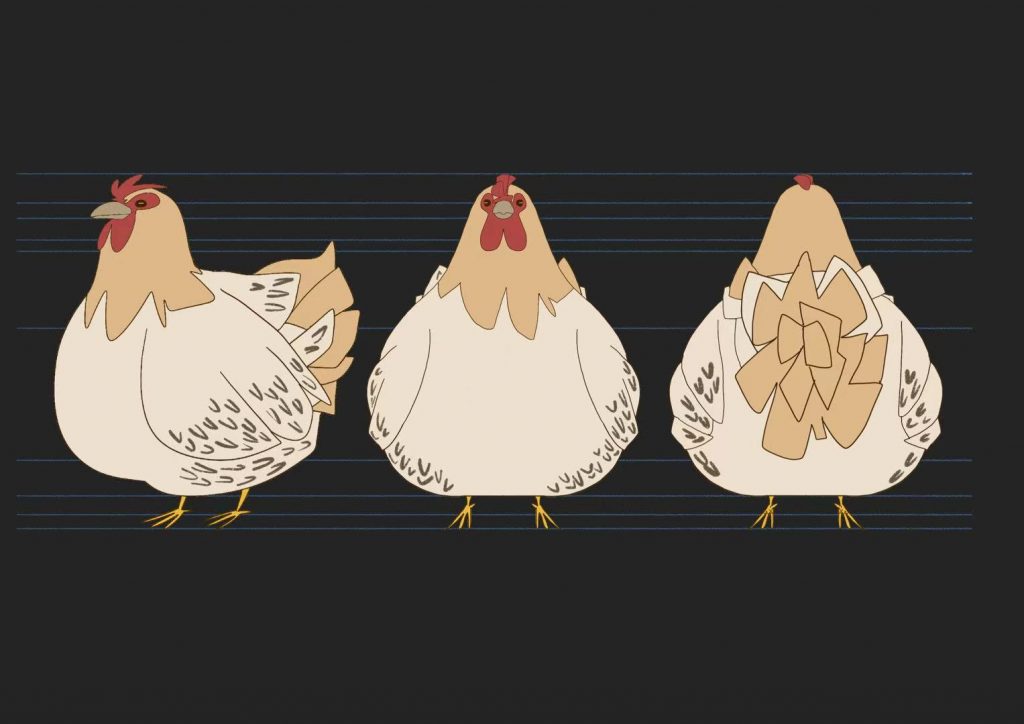
My role in the project was 3D modeling and rigging for one of the animal characters, a chicken. Since the character was already designed, I needed to use 3D software to create the model and set up the rig according to the original design sketches.
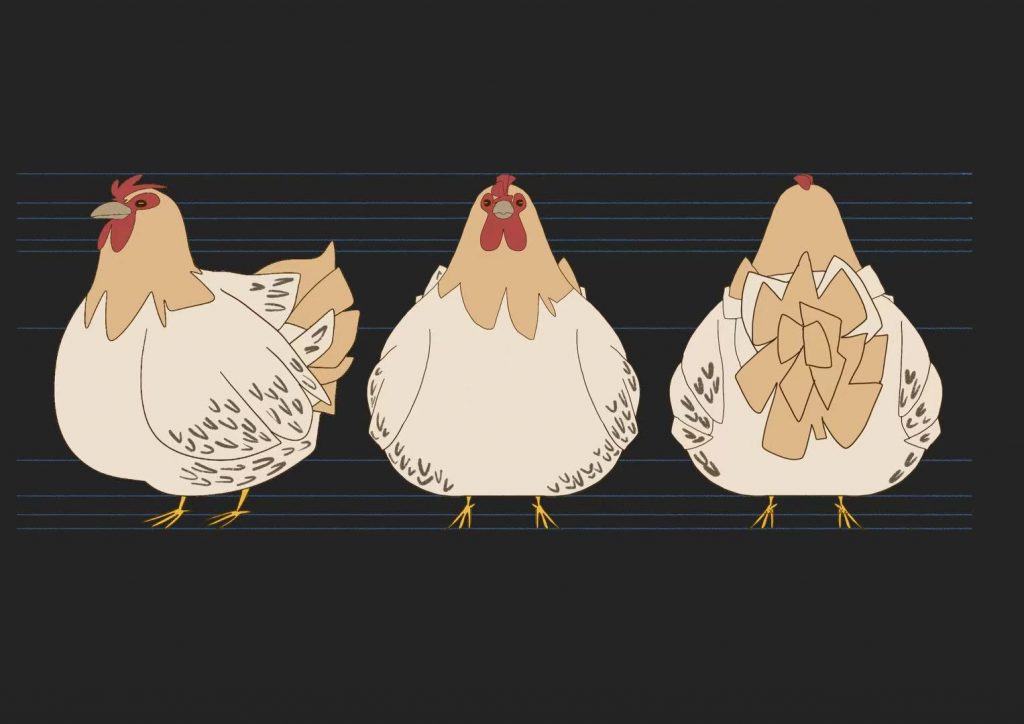
For the final execution, I used Maya for modeling and Blender for rigging. I completed the entire character modeling and rigging process independently, meeting all the project requirements.
The following images show my step-by-step modeling process in Maya.
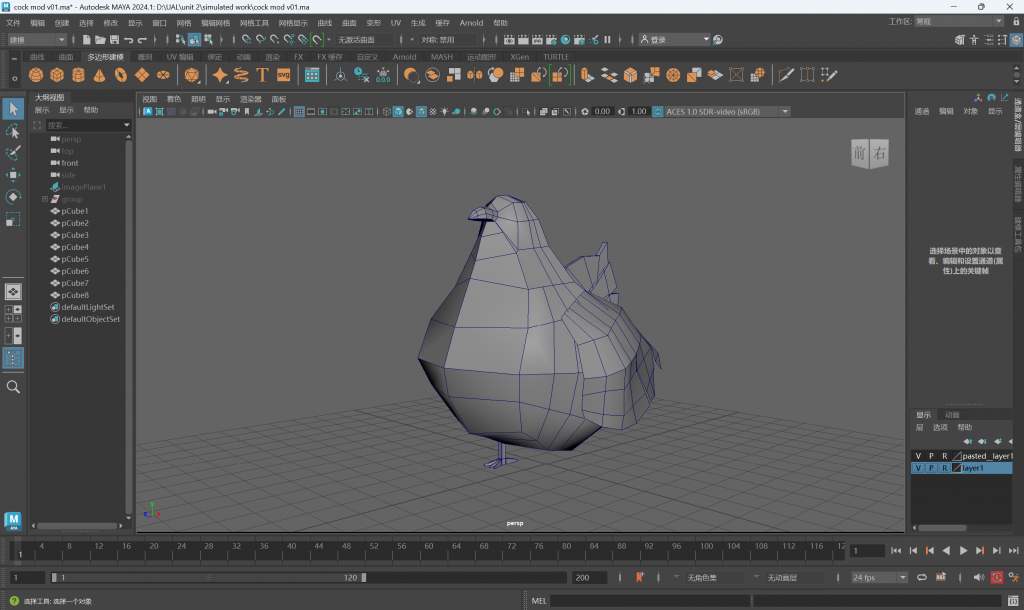
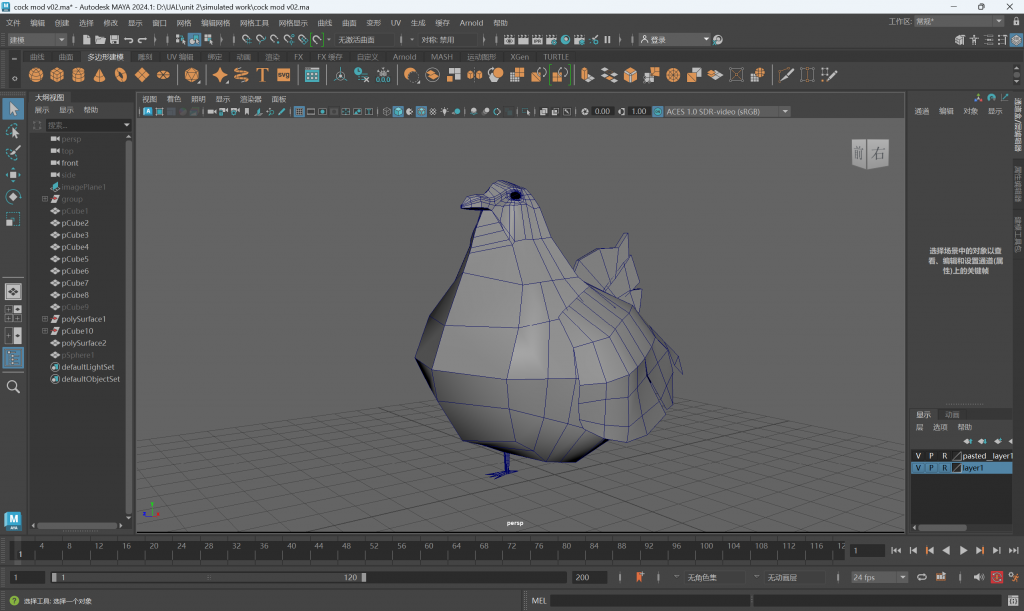
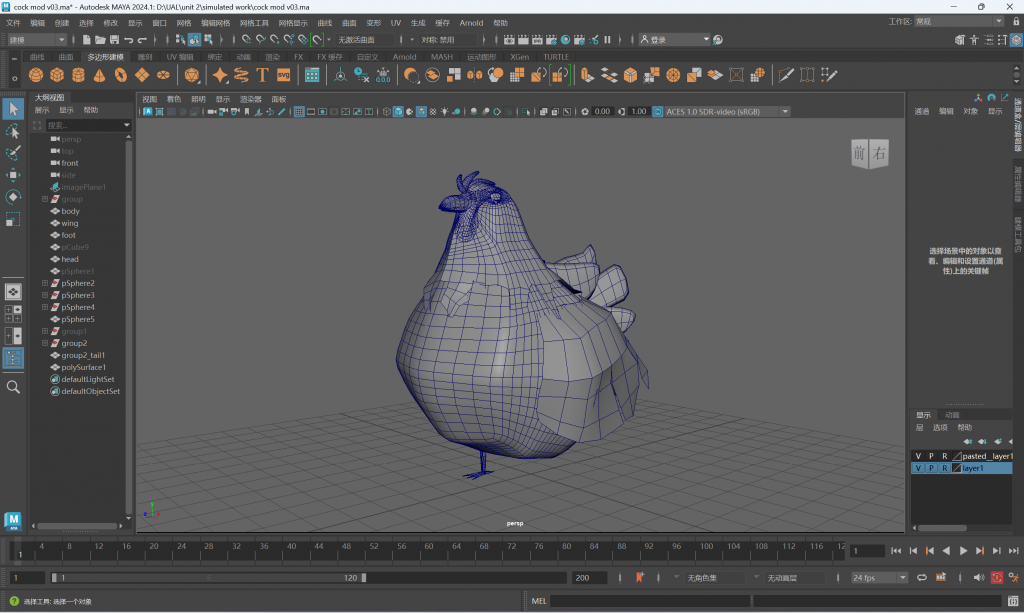
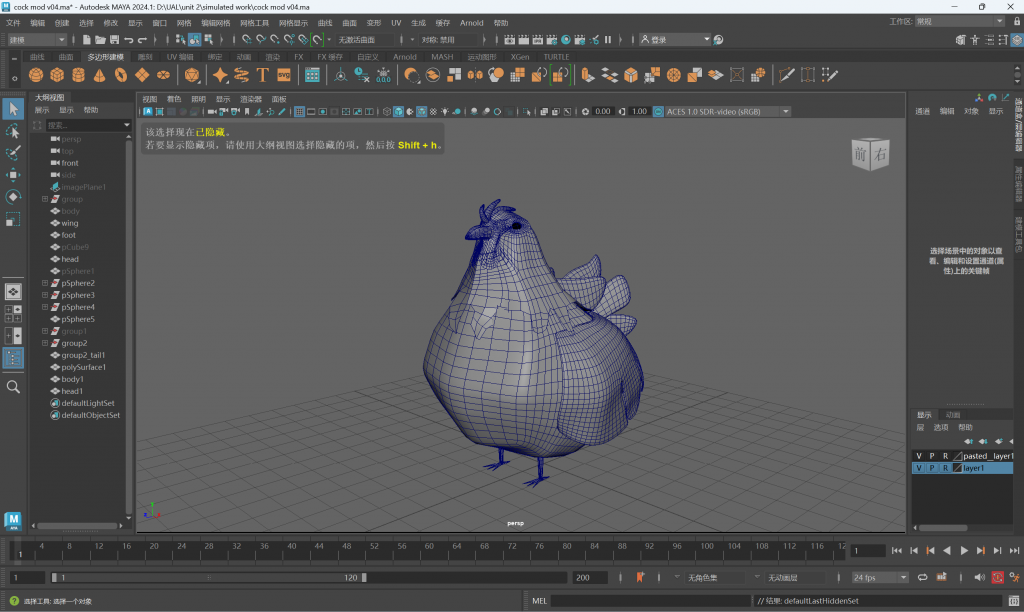
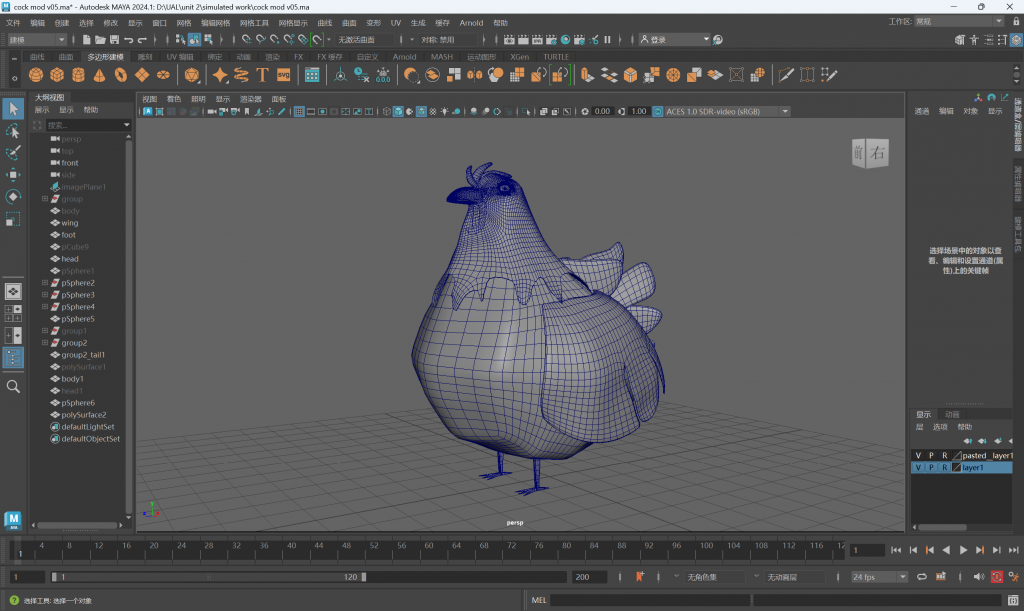
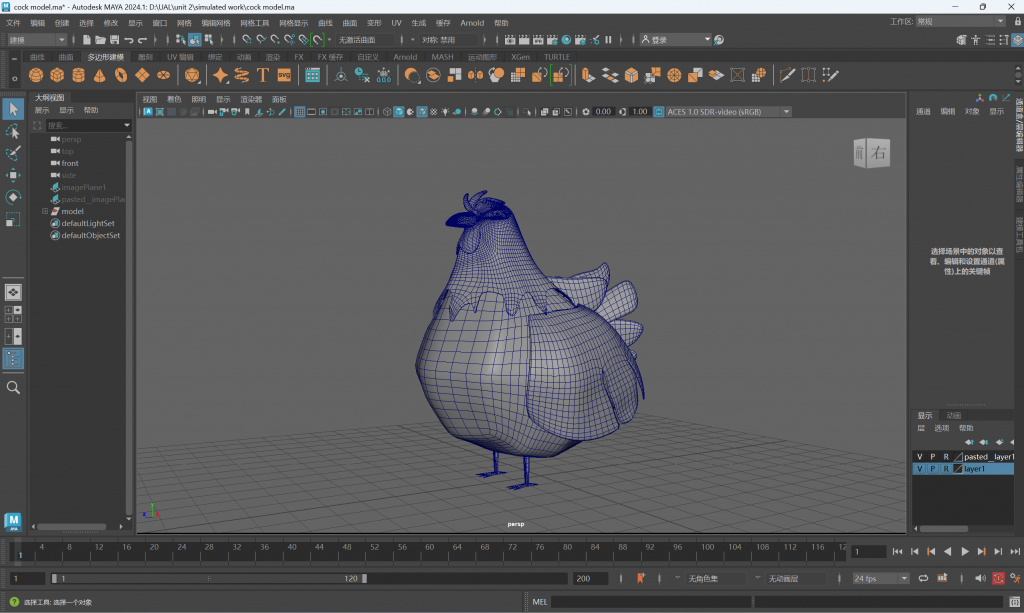
The chicken’s head has very distinct features, and I wanted to emphasize the unique shape of its comb. Based on the head model, I separately modeled the comb and the area around the eyes. This makes the structure look more three-dimensional and helps distinguish the red parts from the design, making it easier to create the materials later.
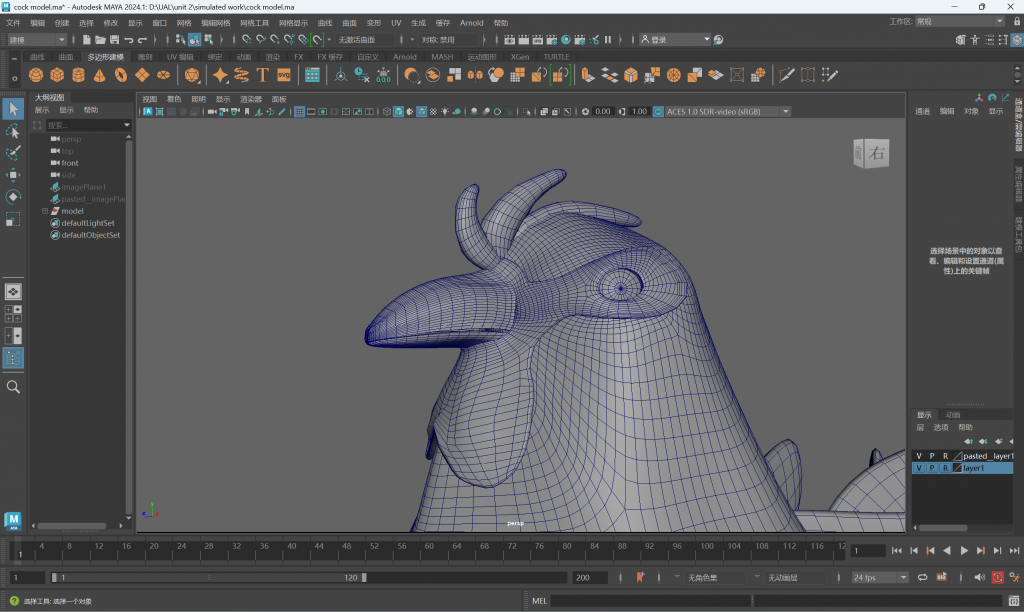
After making some detailed adjustments—including separating the upper and lower beak, positioning the tail, and mirroring the entire body—I obtained the completed model.
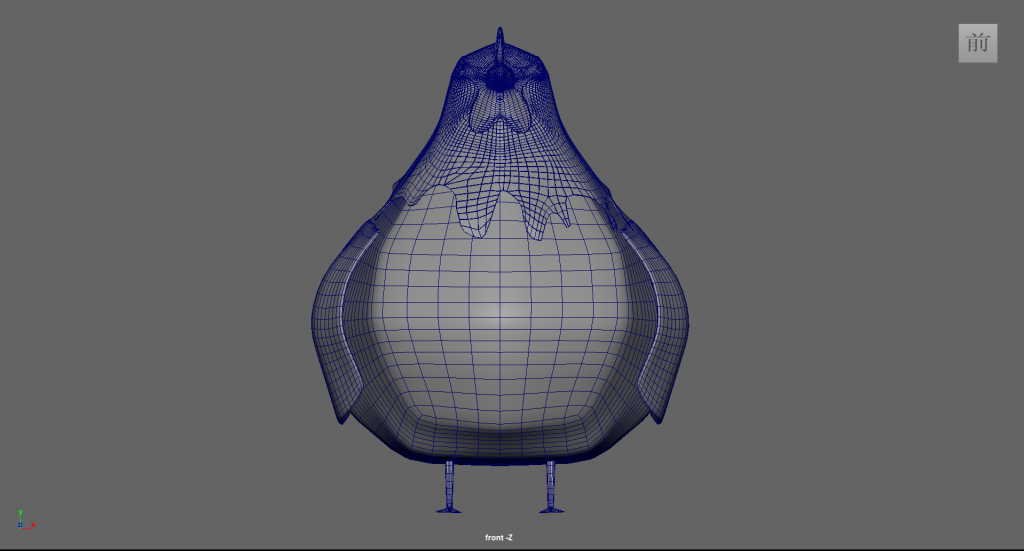
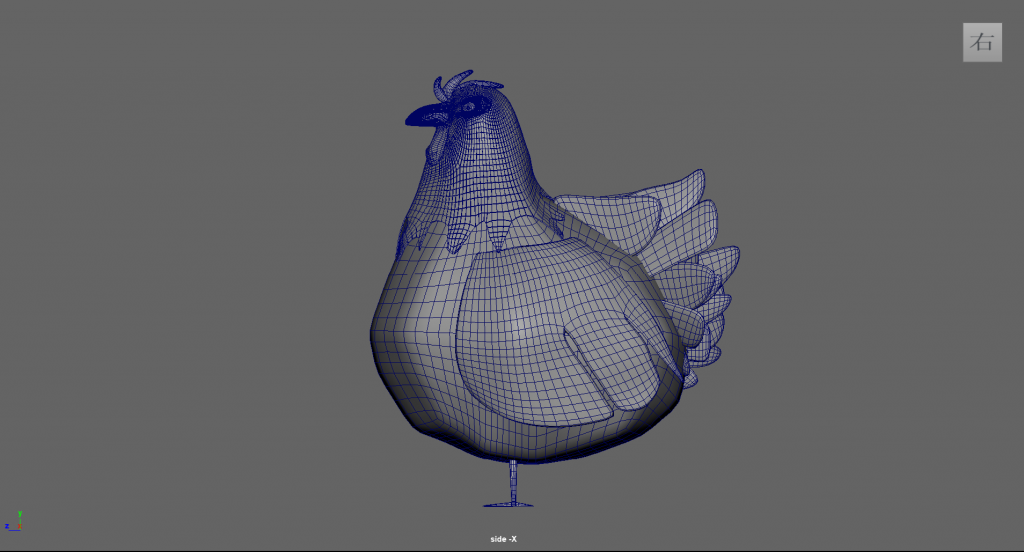
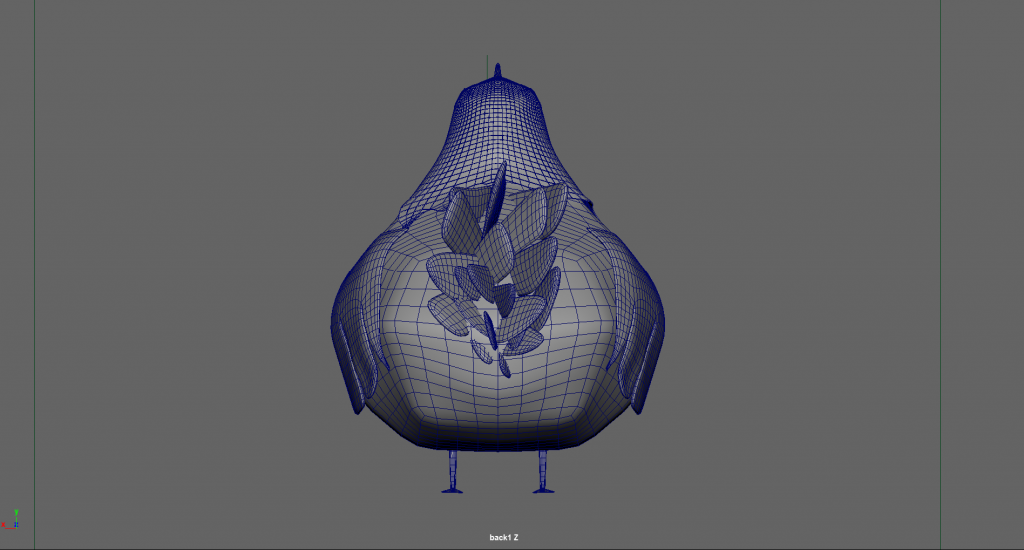
After the Year 2 confirmed the model was fine, they suggested I try rigging the character in Blender. Since I had only done rigging in Maya before, I wasn’t very familiar with Blender and wasn’t sure if I could handle the task.
I spent some time watching tutorials on the basic use of the Auto-Rig Pro plugin in Blender and studied how other designers rigged birds. Finally, I imported the chicken model into Blender and attempted the rigging process.
The process was filled with issues, such as missing bones, skinning errors, and model deformation. These confusing problems were quite frustrating and made me feel uneasy. Fortunately, after many attempts, I managed to resolve the main issues and successfully rigged the chicken character.
Overall, this collaboration has been an incredibly pleasant experience. I am thrilled to have contributed to the Year 2 seniors’ project and to have built friendships with them along the way. For me, it was a highly rewarding exercise: I became much more proficient with the software—particularly Maya modeling techniques and Blender rigging plugins. Observing the creative process of more experienced animators was invaluable. Moving forward, I plan to adopt their methodologies and utilize Blender to create my own stylized animated shorts.
Leave a Reply