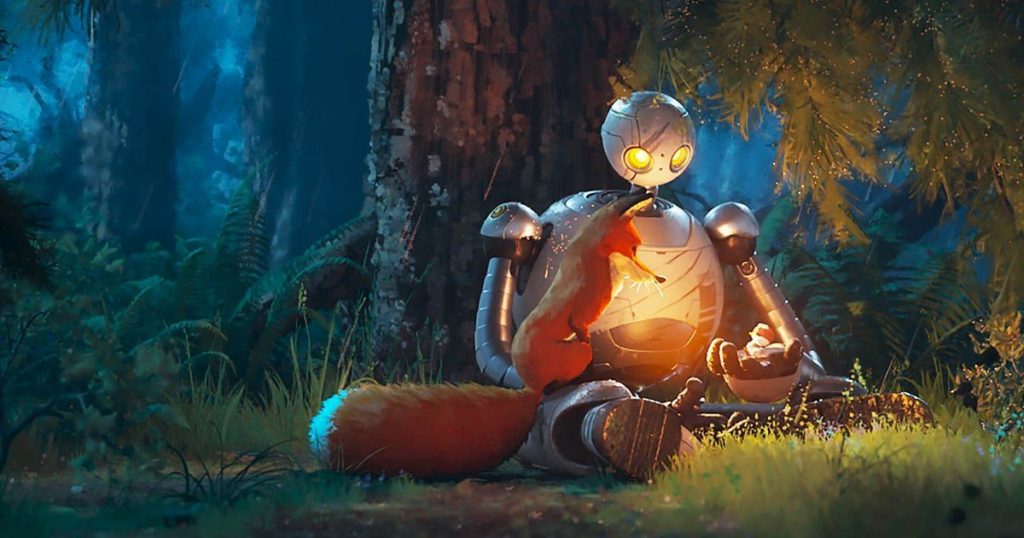
The animation clip I selected is from the 2024 film The Wild Robot, specifically the scene where Brightbill learns to fly. This movie left a deep impression on me, not only for its unique art style and animation performance but also for its powerful storytelling.
I will analyze some of the animation principles applied in this clip.
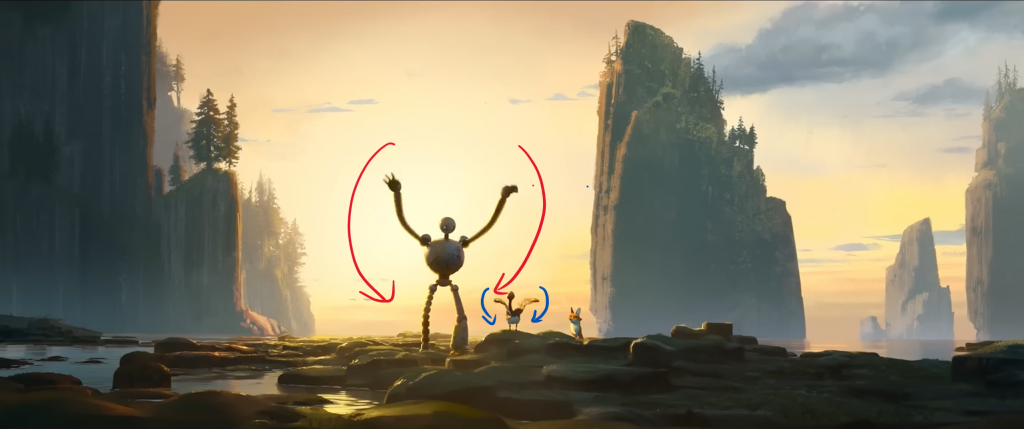
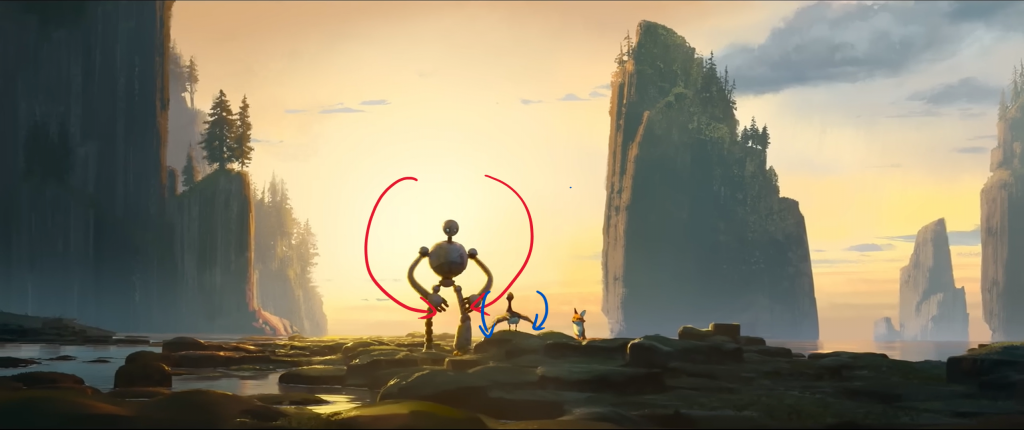
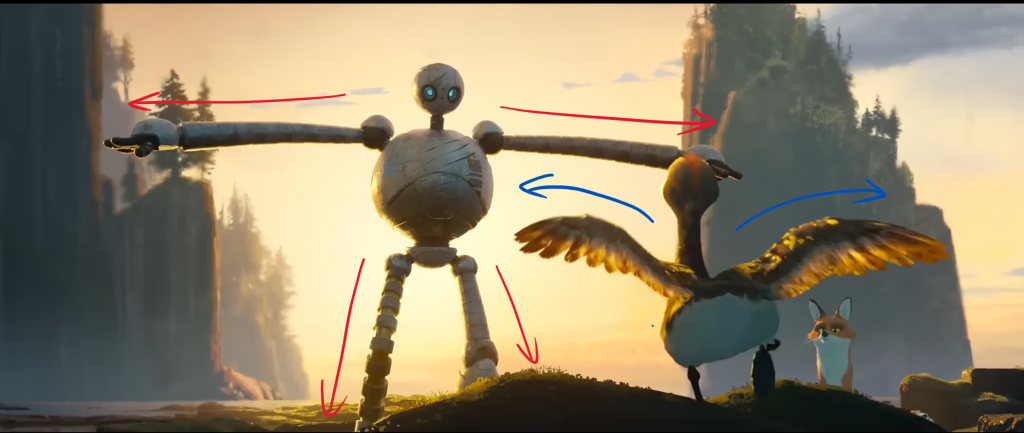
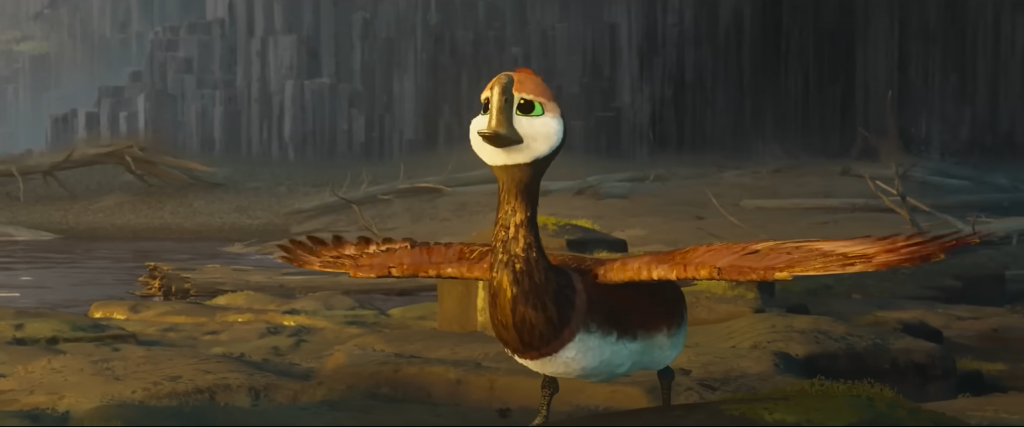
In the first shot, we can see that the movements of both Roz and Brightbill follow graceful arcs. It is also clear that during the lifting and lowering motions, the trajectories of the arms and wings exhibit slow in and slow out. This aligns with the laws of motion in nature, giving the animation a sense of realism.
In the final frame, although 3D models don’t typically show squash and stretch as obviously as hand-drawn animation, we can still see the stretching in Roz’s arms. In contrast, due to his lack of confidence, Brightbill does not fully stretch his wings.
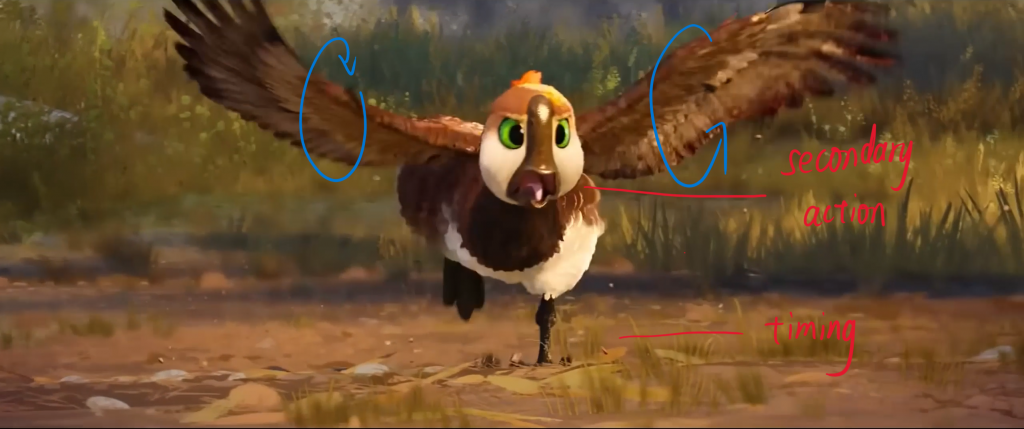
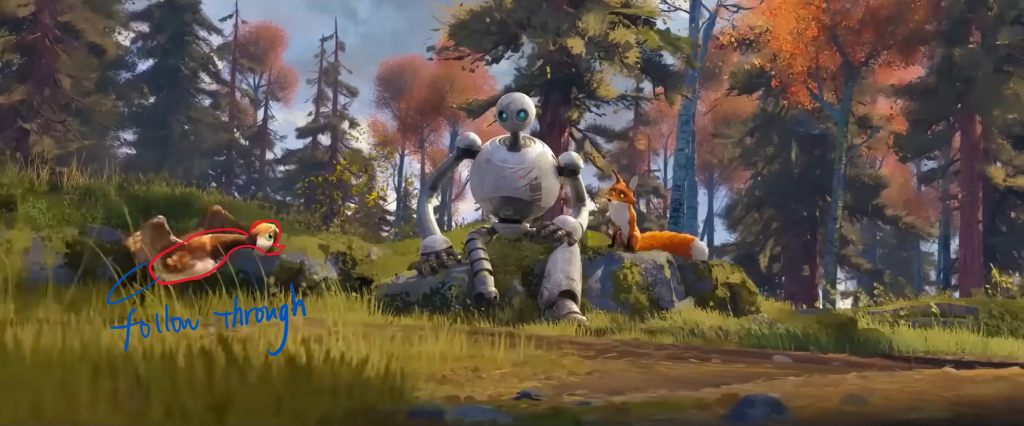
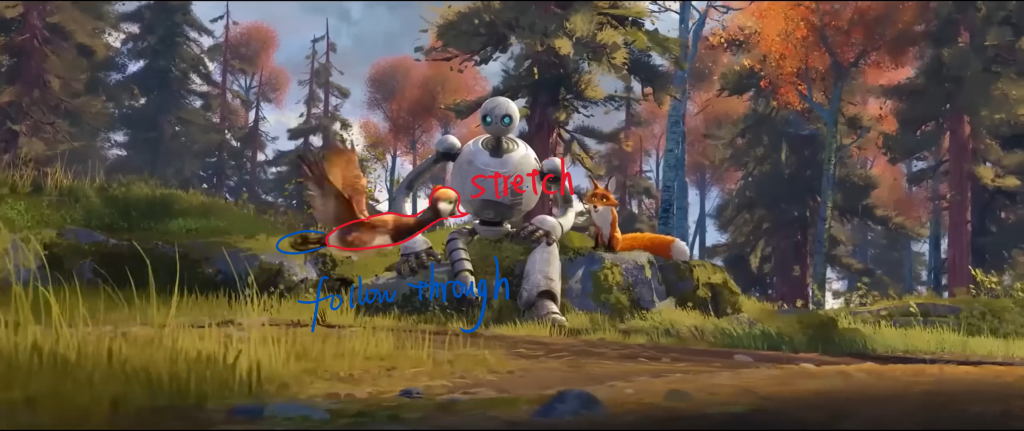
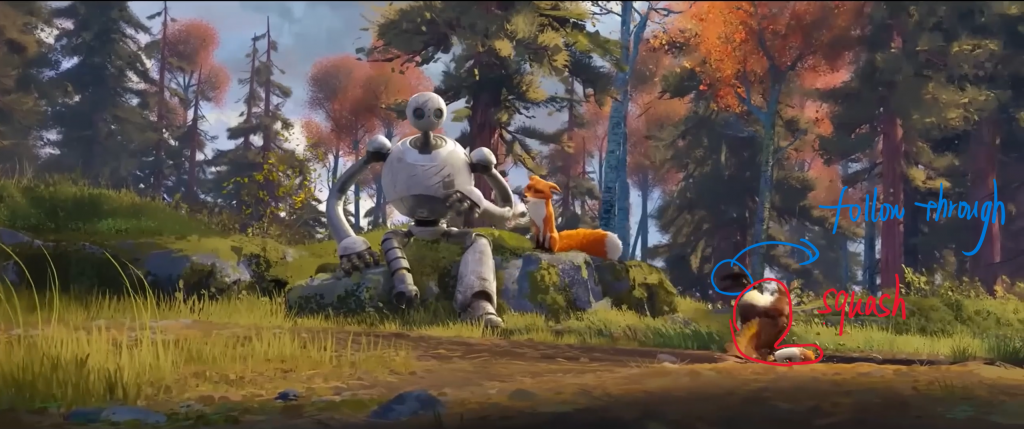
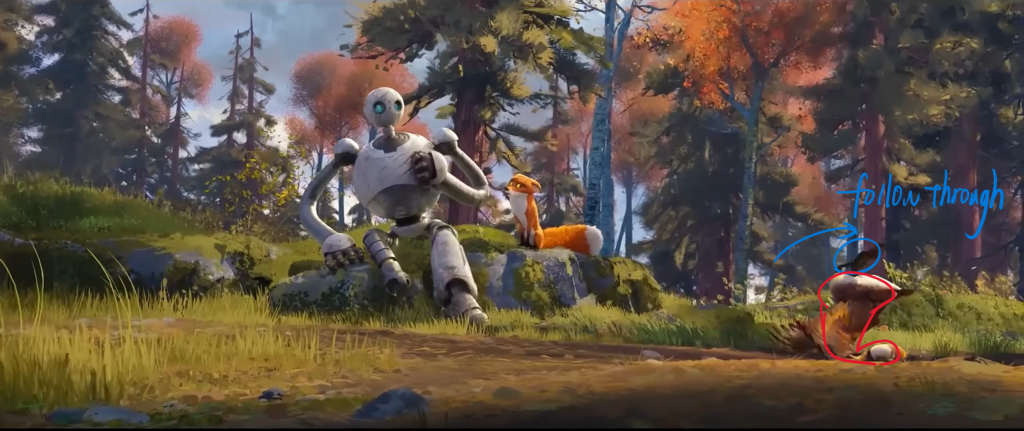
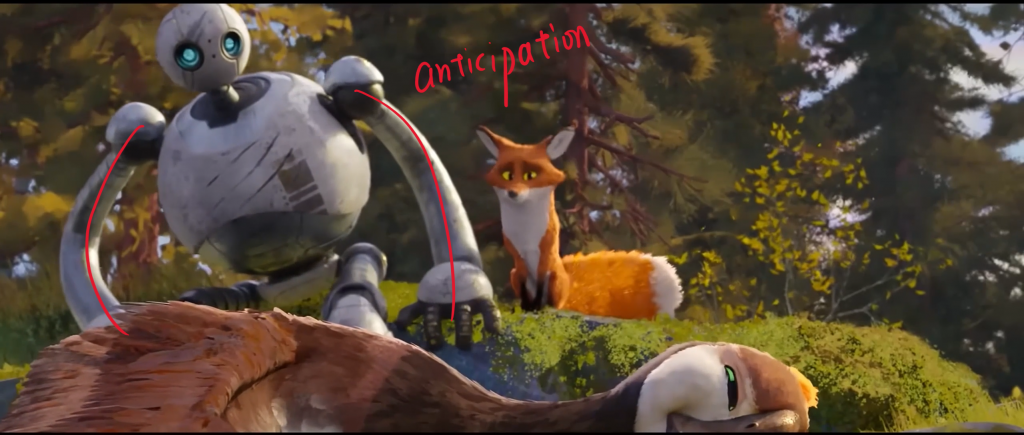
In the second shot, we see Brightbill running from a distance. His movements are rapid and fast-paced, with every part of his body moving in a very compact manner, which perfectly demonstrates the principle of Timing. While the swaying of his body and the alternating steps of his feet serve as the primary actions, the rapid flapping of his wings accompanied by hurried breathing act as Secondary Actions. These details effectively convey his sense of panic and nervousness.
Furthermore, in the segment where he attempts to fly and fails, we can observe the Squash and Stretch of his body across the three stages: taking off, being in mid-air, and landing. The application of these principles makes his movement look more natural and grounded, while intensifying the power of the takeoff and the impact of the landing.
During this sequence, his feet serve as the Follow Through. We can see his feet trailing behind at takeoff; then, upon landing, while his body stops due to the collision, his feet continue to swing forward due to inertia. This action also utilizes the principle of Exaggeration to enhance the dramatic effect—naturally, an animal wouldn’t land head-first as it’s too dangerous, but here it adds to the storytelling.
However, I feel that if the animators had let Brightbill hover for a few frames or struggle momentarily before plunging—much like the classic gags we often see in Tom and Jerry—the effect might have been even better. It would have highlighted his clumsiness more effectively and created a stronger sense of “failed expectations.”

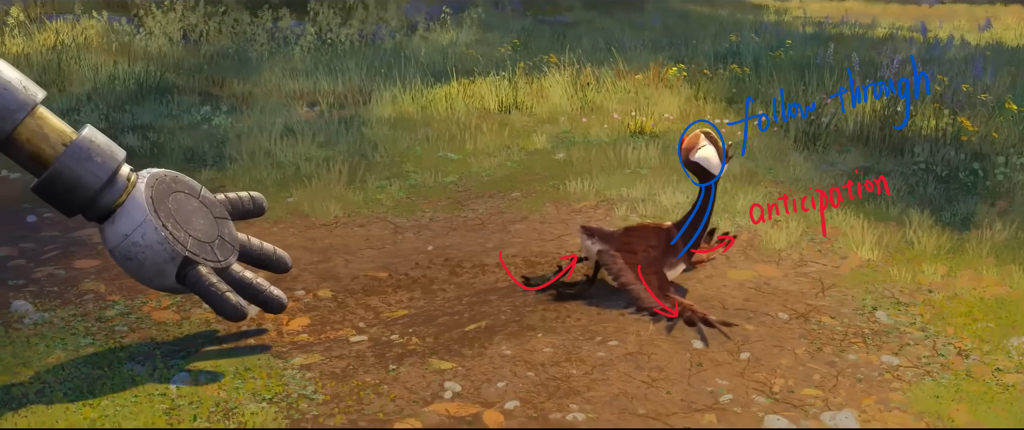
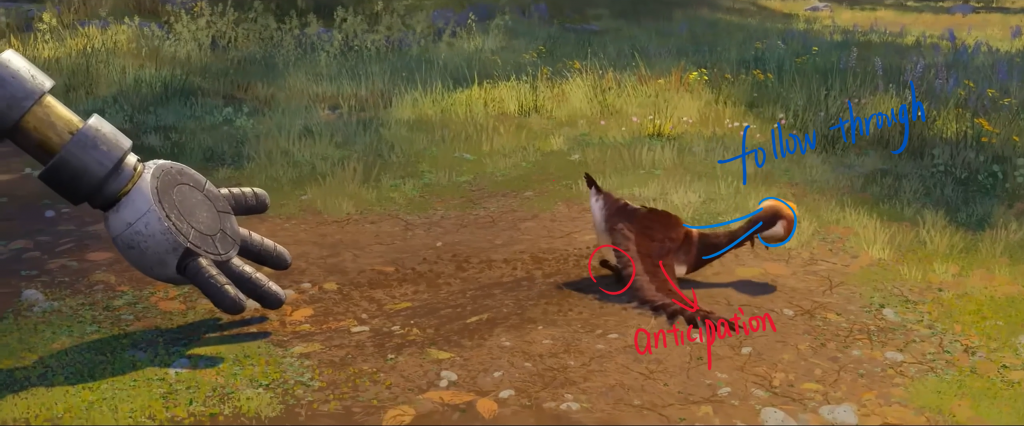
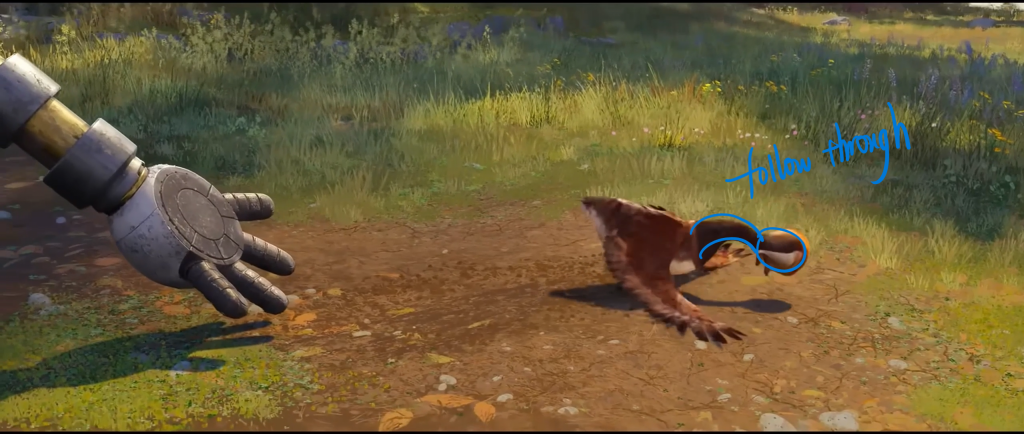
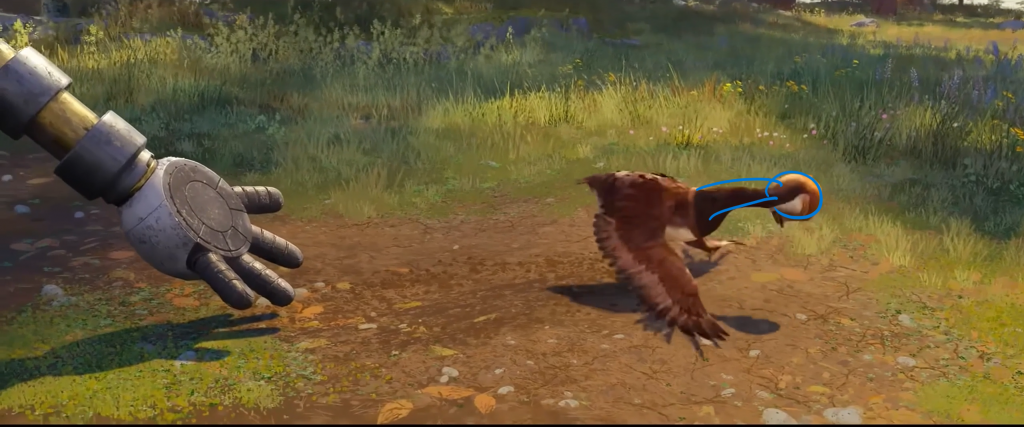
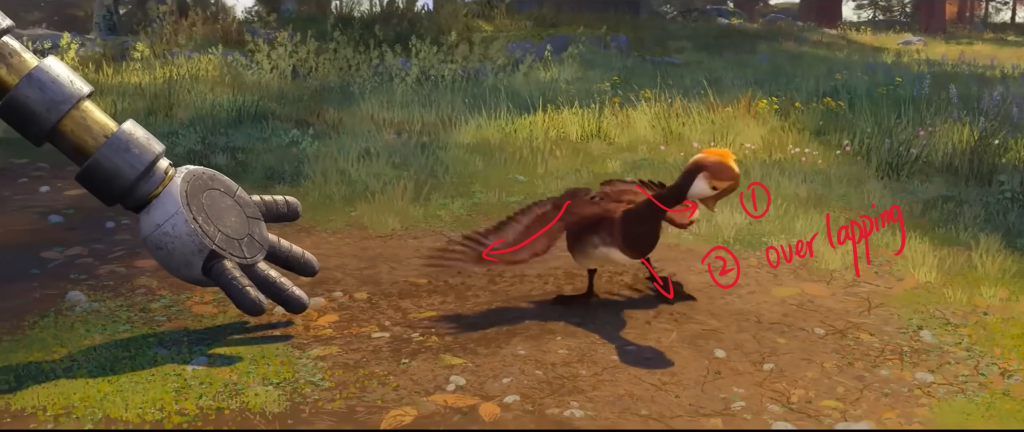
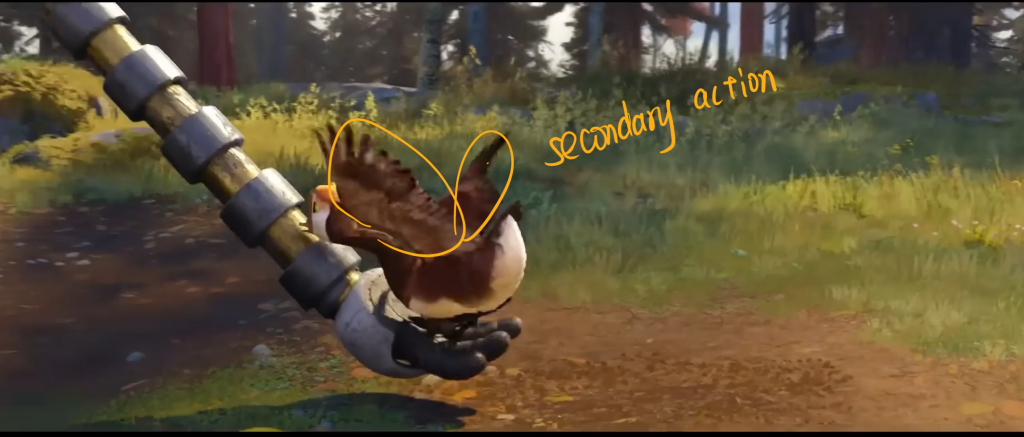
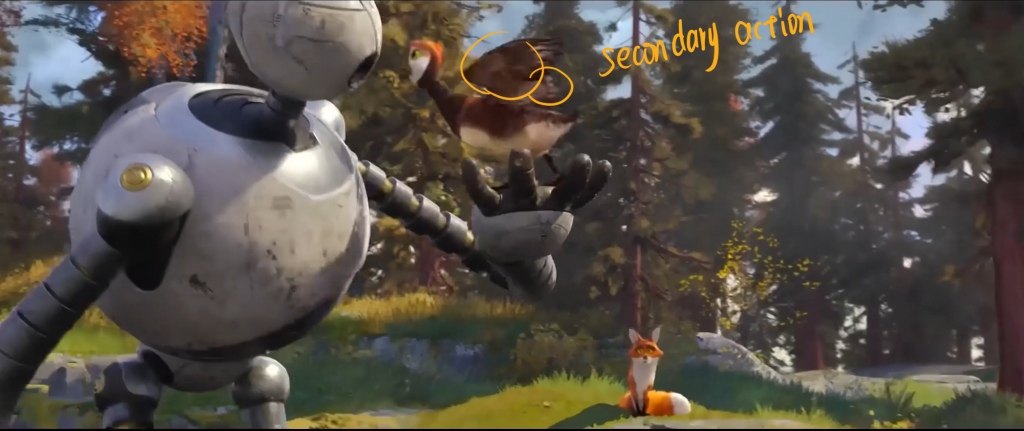
In the next shot, Brightbill stands up in disappointment and runs onto Roz’s shoulder. I noticed that when he gets up, he doesn’t just stand straight up; instead, he uses his wings to brace himself while his feet retract—a clear Anticipation movement. Due to his long neck, his head and neck act much like the Follow Through we practiced before, bouncing up as if following a curved Arc. Furthermore, the movements of his wings and feet are always out of sync. This staggering of different body parts aligns with the principle of Overlapping Action, preventing the animation from looking stiff or mechanical.
As he runs along Roz’s arm, we can see that it’s not just his legs moving. His wings are frequently flapping as a Secondary Action, which makes him look incredibly vivid and captures the nimble, playful energy of a young bird.
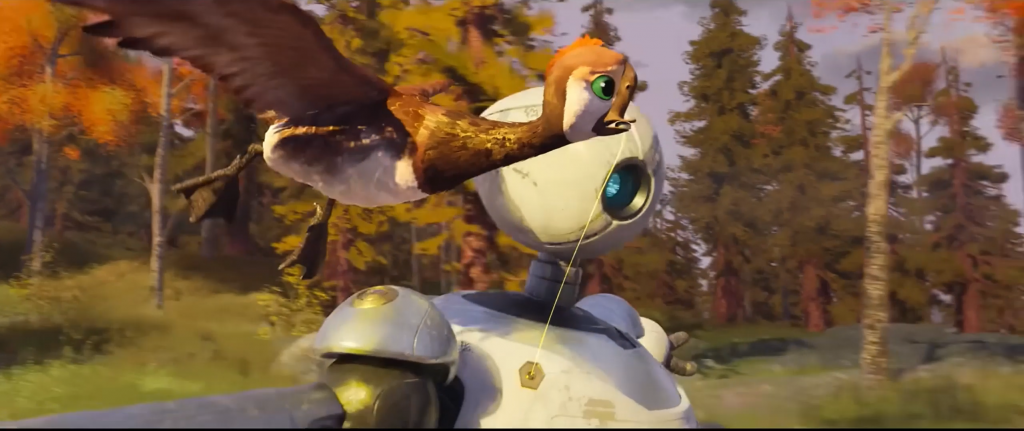
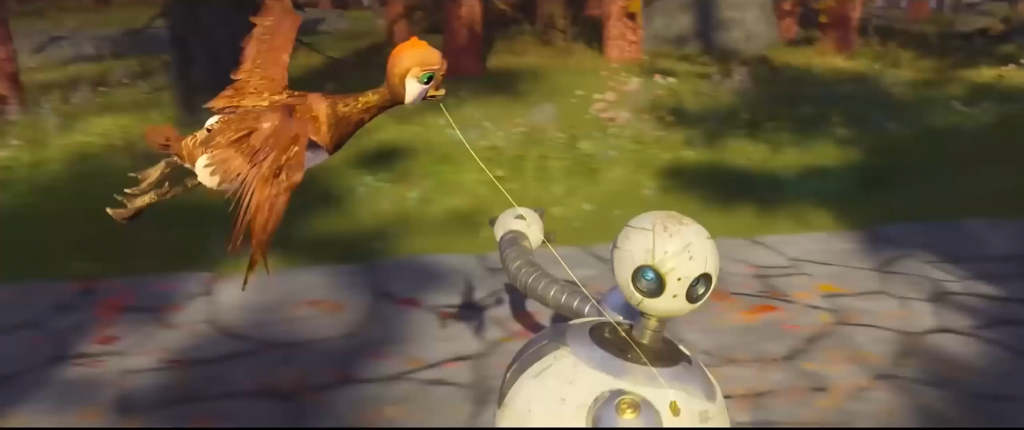
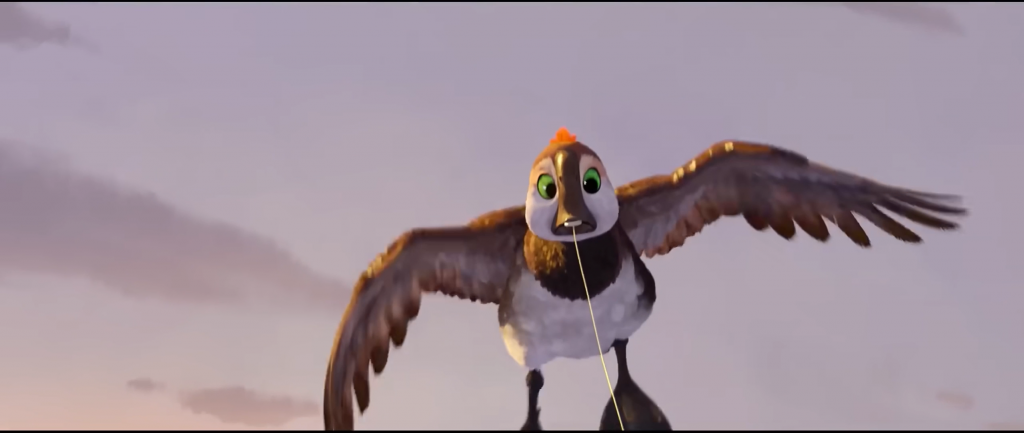
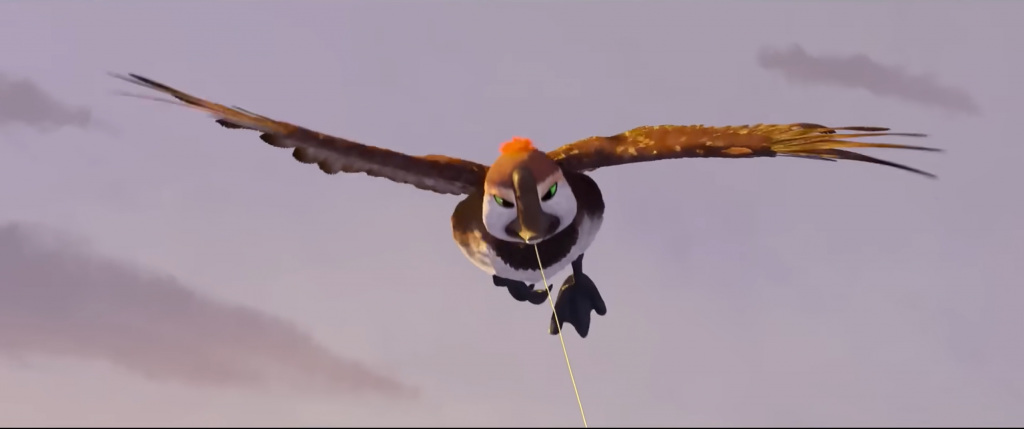
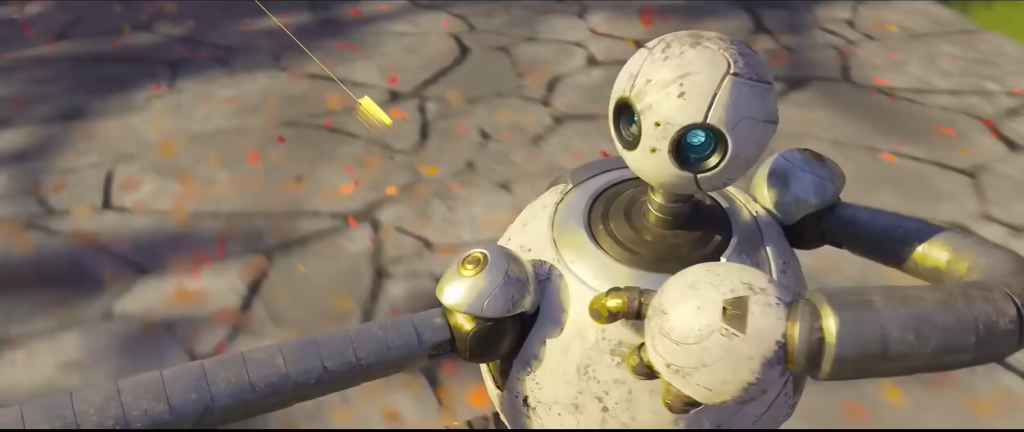
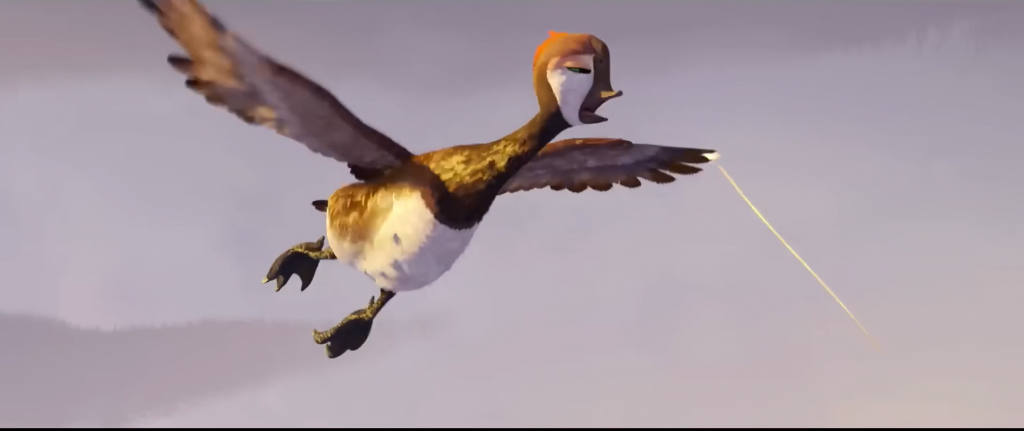
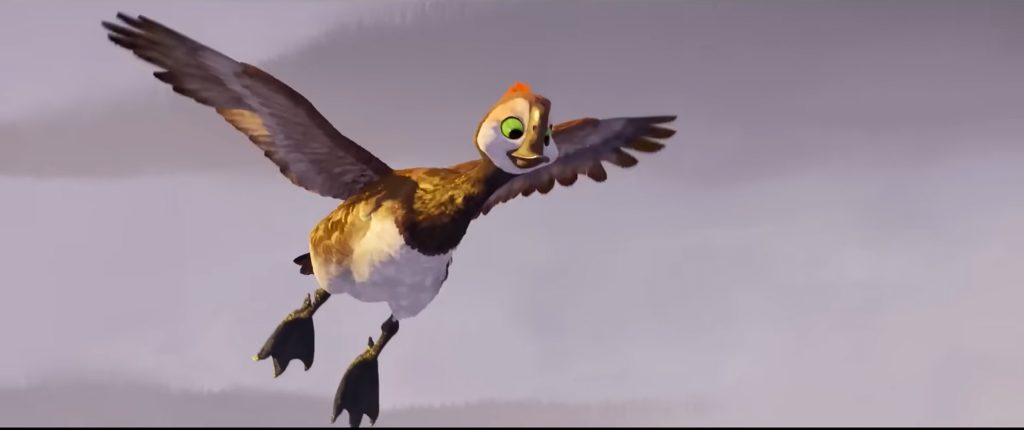
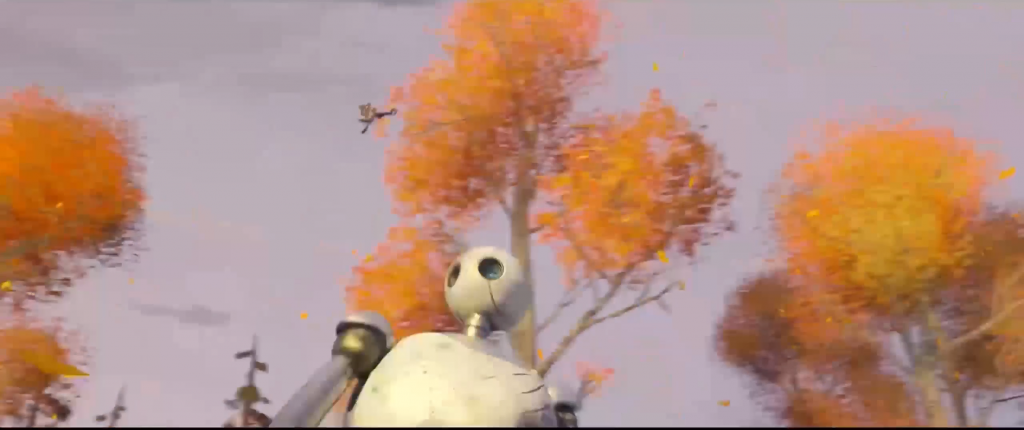
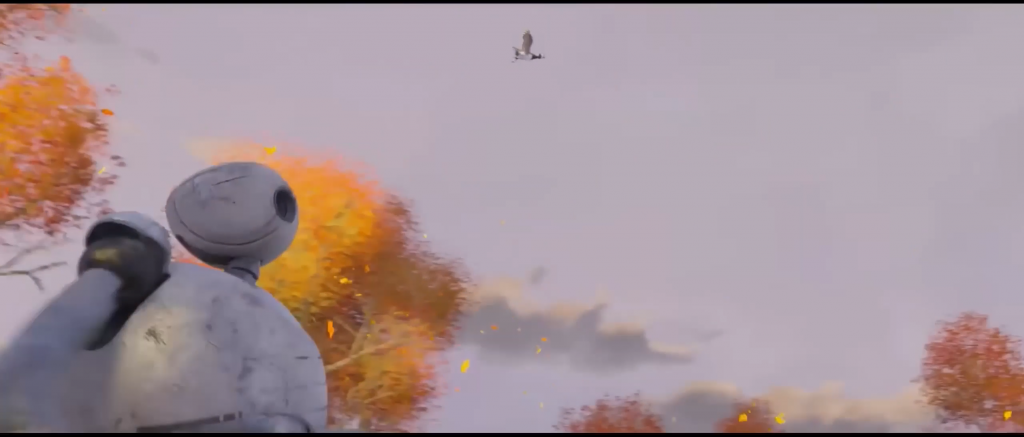
The next scene transitions to the training sequence where Roz guides Brightbill in his flight practice. In this shot, Brightbill’s speed gradually overtakes Roz’s. Initially, he acts as a Follow Through element, being pulled behind by the tether’s tension. Once Roz releases the rope, Inertia causes him to continue drifting backward toward the left of the frame. However, he quickly begins to fly using his own strength, leading to a significant shift in Timing. His movement becomes incredibly fast, crossing the entire screen in a short burst and swiftly soaring over Roz’s head in the following frame.
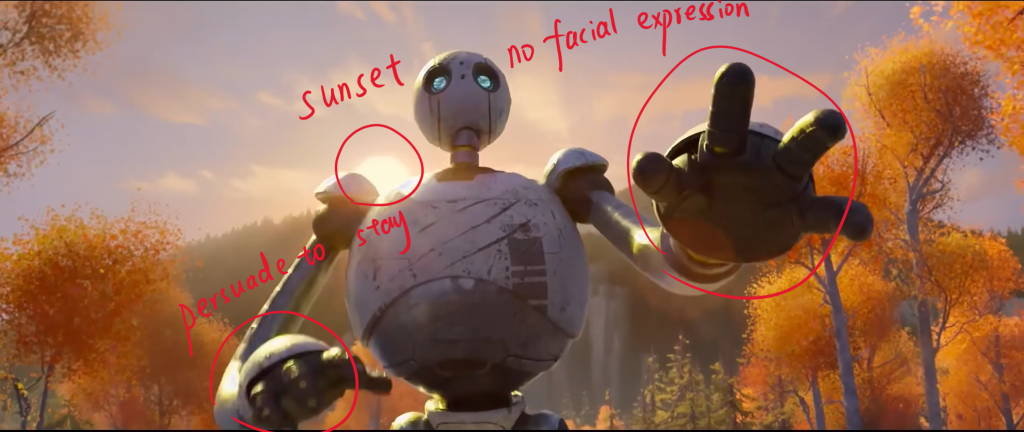
The final shot is full of Appeal. For me, this is a deeply moving moment—a medium shot of Roz. Even though her robotic face is expressionless, I can strongly feel her rich inner emotions. Unlike the previous running scenes where the camera remained at eye level, the framing here creates a poignant sense that she can no longer run faster or keep up with Brightbill’s speed. The sunset in the background, combined with her body language—one hand retracted while the other reaches out as if trying to hold on—conveys a complex mix of worry, fulfillment, and regret. At the same time, her pace visibly slows down, emphasizing the growing distance between them.
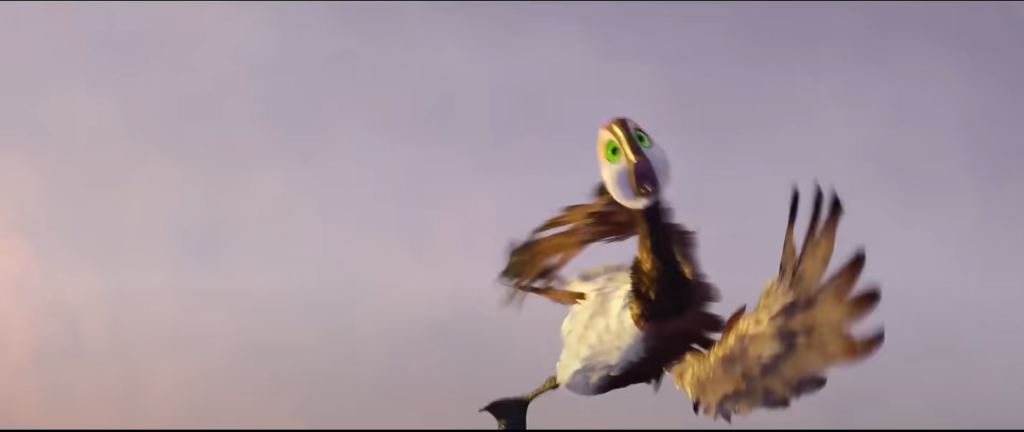
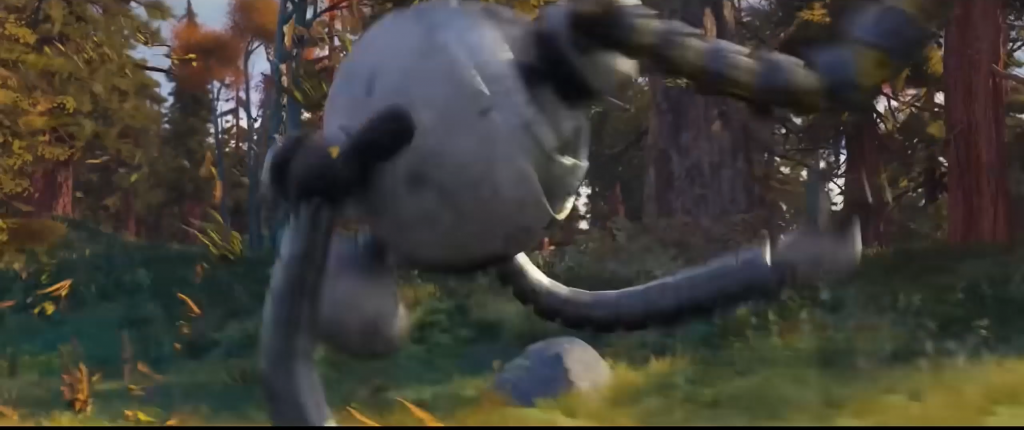
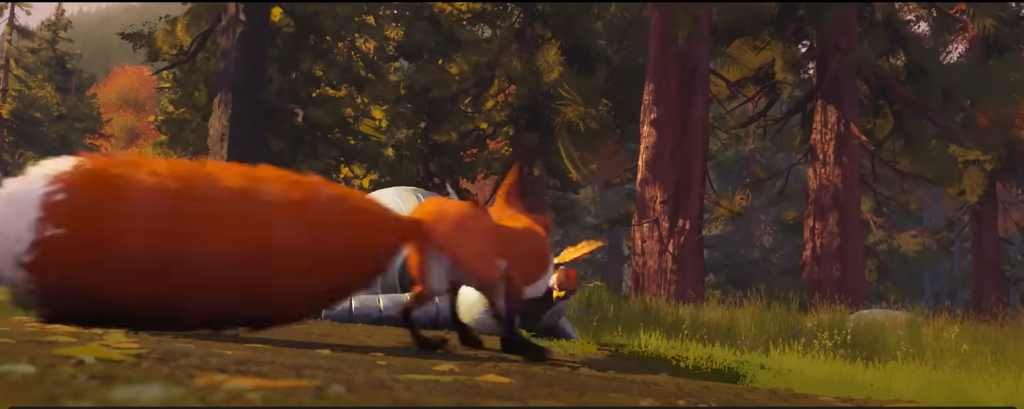
Similarly, various animation principles are widely applied across other non-sequential shots. For instance, the use of Exaggeration and Timing when Roz trips and Brightbill falls, and the Follow Through on Fink the fox’s tail whenever he moves, are all excellent examples.
Leave a Reply